
When hunting for Ingredients specialists in Pokémon Sleep, you may come across advice such as “AAA is best,” “ABB is worth raising,” or “Avoid ABA and ABC.”
Personally, I generally prioritize AAA and ABB spreads for Ingredients specialists. They make it easier to gather a specific ingredient in large quantities and remain useful when the cooking meta changes.
However, I don’t place nearly as much importance on ingredient spreads for Berries and Skills specialists. Sometimes, I even appreciate mixed spreads like ABC.
In this article, I’ll explain what AAA, ABB, and ABA mean, how likely each spread is to appear, and how I evaluate ingredient spreads based on my own experience raising Pokémon.
目次
- What Do AAA, ABB, and ABA Mean in Pokémon Sleep?
- AAA Has a 1-in-9 Chance: Ingredient Spread Probabilities
- Why I Prioritize AAA and ABB for Ingredients Specialists
- Why I Generally Don’t Recommend ABA or ABC
- When Is an ABA Pokémon Worth Raising to Lv. 60?
- How Should You Evaluate AAB and AAC?
- How Much Do Ingredient Spreads Matter for Berries and Skills Specialists?
- Conclusion: Evaluate Ingredient Spreads Based on Each Pokémon’s Role
What Do AAA, ABB, and ABA Mean in Pokémon Sleep?
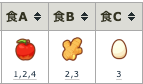
AAA, ABB, and similar combinations describe the ingredients a Pokémon can gather from its three ingredient slots. These slots unlock at Lv. 1, 30, and 60, while A, B, and C represent the different ingredients available to that Pokémon.
- A: The ingredient available from Lv. 1.
- B: A different ingredient that can appear in the Lv. 30 slot.
- C: A third ingredient that can appear in the Lv. 60 slot.
For example, Blastoise has Moomoo Milk as its A ingredient, Soothing Cacao as B, and Bean Sausage as C. Its possible ingredient spreads look like this:
| Spread | Lv. 1 | Lv. 30 | Lv. 60 |
|---|---|---|---|
| AAA | Milk | Milk | Milk |
| AAB | Milk | Milk | Cacao |
| AAC | Milk | Milk | Bean Sausage |
| ABA | Milk | Cacao | Milk |
| ABB | Milk | Cacao | Cacao |
| ABC | Milk | Cacao | Bean Sausage |
Note: Milk and Cacao are shortened names for Moomoo Milk and Soothing Cacao.
An AAA Blastoise gathers only Moomoo Milk, even at Lv. 60. An ABB Blastoise, on the other hand, unlocks Soothing Cacao at Lv. 30 and has two cacao slots at Lv. 60.
However, an ingredient spread alone doesn’t tell you exactly how many ingredients a Pokémon will gather. At Lv. 60, each of the three ingredient slots has approximately a one-third chance of being selected, but the number of ingredients obtained per help differs between slots. Therefore, an ABB Pokémon won’t necessarily gather two-thirds of its total ingredients from B.
AAA Has a 1-in-9 Chance: Ingredient Spread Probabilities
For Pokémon with three possible ingredient types, the probabilities of each spread are as follows:
| Spread | Probability | Percentage |
|---|---|---|
| AAA | 1/9 | Approx. 11.1% |
| AAB | 1/9 | Approx. 11.1% |
| AAC | 1/9 | Approx. 11.1% |
| ABA | 2/9 | Approx. 22.2% |
| ABB | 2/9 | Approx. 22.2% |
| ABC | 2/9 | Approx. 22.2% |
Note: These probabilities apply to Pokémon with three possible ingredient types. Pokémon with only two ingredient types have different combinations and probabilities.
Reference: Pokémon Sleep Strategy & Research Wiki — Ingredients (Japanese)
AAA has an approximately 11.1% chance of appearing, or roughly one in nine Pokémon on average. If you also want Ingredient Finder M, Helping Bonus, and a nature that boosts ingredient finding, obtaining your ideal Pokémon becomes much harder.
Meanwhile, ABB has an approximately 22.2% chance, twice that of AAA. If both spreads would suit your needs, finding an ABB Pokémon is statistically easier.
That doesn’t mean you should choose a Pokémon based on probability alone. What matters is whether its ingredient spread can gather the ingredients you actually need.
Why I Prioritize AAA and ABB for Ingredients Specialists
I value AAA and ABB because they are convenient for gathering specific ingredients. While natures and sub skills also matter, I focus on two advantages when evaluating these spreads.
They Can Focus on Gathering a Specific Ingredient
AAA is suited to gathering large quantities of ingredient A, while ABB focuses mainly on ingredient B.
For example, you can raise an AAA Blastoise as a milk farmer and an ABB Blastoise as a cacao farmer. This makes it easier to switch team members depending on which ingredients your recipes require.
ABA and ABC can gather multiple ingredients, but they also bring back ingredients you may not need. When you’re trying to collect a particular ingredient quickly, I find a more specialized spread easier to manage.
They Remain Useful When the Cooking Meta Changes
Whenever Pokémon Sleep introduces new recipes, the ingredients and quantities needed for high-Strength dishes can change. A recipe that was once powerful may see less use after stronger alternatives become available.
For example, an ABC Blastoise used to be valued because it could gather the ingredients needed for Contrary Chocolate Meat Salad by itself. Since it gathers milk, cacao, and Bean Sausage, that particular recipe was a good match.
However, in an environment where Pokémon can be raised to Lv. 60, I don’t find it especially appealing to invest in Blastoise specifically for that recipe. If I stop making the dish, the Pokémon may no longer have a clear role.
An AAA Blastoise can still gather milk for other recipes, while an ABB Blastoise can gather cacao. Demand for those ingredients may change too, but their usefulness is less dependent on one particular recipe.
For long-term use, I prefer raising Pokémon that specialize in individual ingredients rather than relying on a particular combination of ingredients for one dish.
Why I Generally Don’t Recommend ABA or ABC
Another reason I’m cautious about ABA and ABC spreads for Ingredients specialists is that they may struggle to supply the exact ingredients you need at the right time.
For example, Skeledirge has Fancy Apple as its A ingredient, Bean Sausage as B, and Fiery Herb as C. Few recipes use apples and Bean Sausage together, and Bean Sausage isn’t used in desserts or drinks.
Personally, I find it inconvenient when a Pokémon brings back Bean Sausage while I’m trying to gather apples. A powerful recipe using both ingredients might appear in the future, but that recipe might not remain relevant forever.
High Average Output Doesn’t Guarantee Ingredients When You Need Them
Dragonite provides a useful example of this problem.
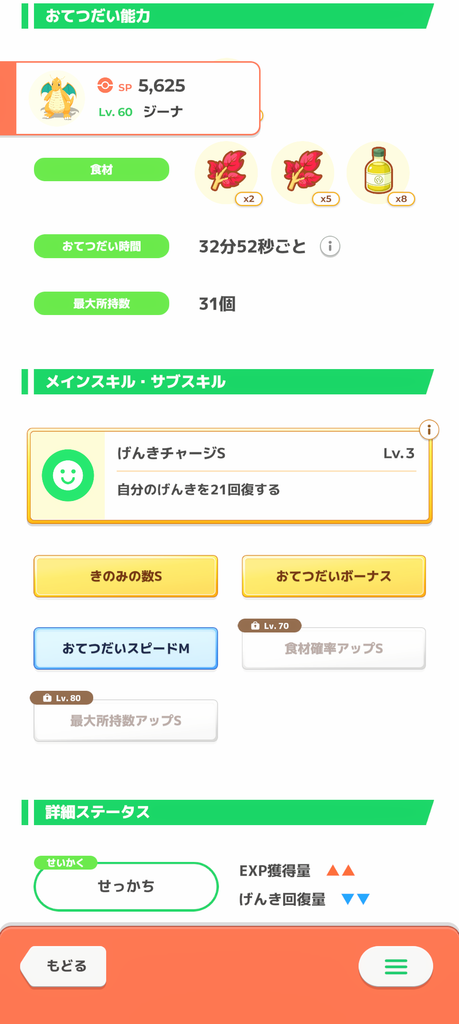
Dragonite has Fiery Herb as its A ingredient, Greengrass Corn as B, and Pure Oil as C. It has excellent ingredient-gathering potential, and a Lv. 60 Dragonite with oil unlocked can, under certain conditions, collect amounts comparable to Pokémon specializing in Pure Oil.
However, an AAC Dragonite gathers both herbs and oil through ingredient rolls after Lv. 60.
Even if its estimated daily oil production is enough for three meals, it might gather mostly herbs before breakfast and lunch, then bring back a large amount of oil before dinner.
You can manage this by stockpiling ingredients or using another Pokémon to fill the gaps, but maintaining a reliable supply for every meal becomes more complicated.
A high estimated daily average doesn’t necessarily mean a Pokémon can consistently provide enough ingredients for breakfast, lunch, and dinner. This is another reason I prefer AAA and ABB for Ingredients specialists.
Of course, ingredient collection can vary even with specialized spreads. With mixed spreads, however, you also need to account for the possibility of repeatedly collecting ingredients other than the one you’re targeting.
When Is an ABA Pokémon Worth Raising to Lv. 60?
Although I don’t actively hunt for ABA spreads, I think an exceptionally strong Pokémon I’ve already raised can sometimes be worth taking to Lv. 60.
Imagine that you’ve been using an ABA Blastoise at Lv. 30–50 to gather cacao. Once it reaches Lv. 60, its third ingredient slot unlocks milk, increasing the proportion of milk it gathers relative to cacao.
If new recipes increase your demand for milk, raising that Blastoise to Lv. 60 might become worthwhile.
However, I would want it to meet several conditions:
- I’ve already raised and used it at Lv. 30–50.
- It has a nature that increases ingredient finding.
- It has excellent sub skills, such as Ingredient Finder M and a Helping Speed bonus.
- There’s enough demand for the additional A ingredient unlocked at Lv. 60.
I would be particularly interested in an ABA Pokémon with an ingredient-finding nature, Ingredient Finder M, and a Helping Speed sub skill. Unfortunately, I’ve never caught an ABA Pokémon with a combination quite that good.
If I happened to find one early in the hunting process, it could be very appealing. However, after spending a long time hunting for an ideal Pokémon, I wouldn’t go out of my way to settle for ABA.
Actively hunting for an ABA Pokémon and deciding to raise an exceptionally strong ABA Pokémon you already own are two different decisions.
How Should You Evaluate AAB and AAC?
The value of AAB and AAC depends largely on whether you intend to raise the Pokémon to Lv. 60.
Between Lv. 30 and 59, the third ingredient slot remains locked, so AAA, AAB, and AAC all gather only ingredient A. If their natures and sub skills are otherwise identical, their ingredient output won’t differ because of their third-slot spreads.
Therefore, if an AAB or AAC Pokémon can gather enough ingredients for your target recipes at Lv. 30 or 50, it may be worth raising.
I’ve personally raised an AAC Bewear and an AAB Aggron. However, because they start gathering different ingredients at Lv. 60, I’m careful about deciding how far to level them up.
For more details about my experiences and how I decide when to compromise on ingredient spreads, see the following article.

How Much Do Ingredient Spreads Matter for Berries and Skills Specialists?
For Berries and Skills specialists, I prioritize the abilities that support their primary roles rather than their ingredient spreads.
For Berries specialists, sub skills such as Berry Finding S and Helping Bonus are important. For Skills specialists, bonuses such as Skill Trigger help them perform their intended roles. Trying to obtain an ideal ingredient spread on top of everything else would make the hunting process unnecessarily difficult.
That said, an ingredient spread that helps gather ingredients I’m often short on is a welcome bonus.
ABC Can Be Useful for Supporting Your Cooking
My Blaziken has an ABC spread, gathering Tasty Mushroom, Greengrass Soybeans, and Pure Oil.
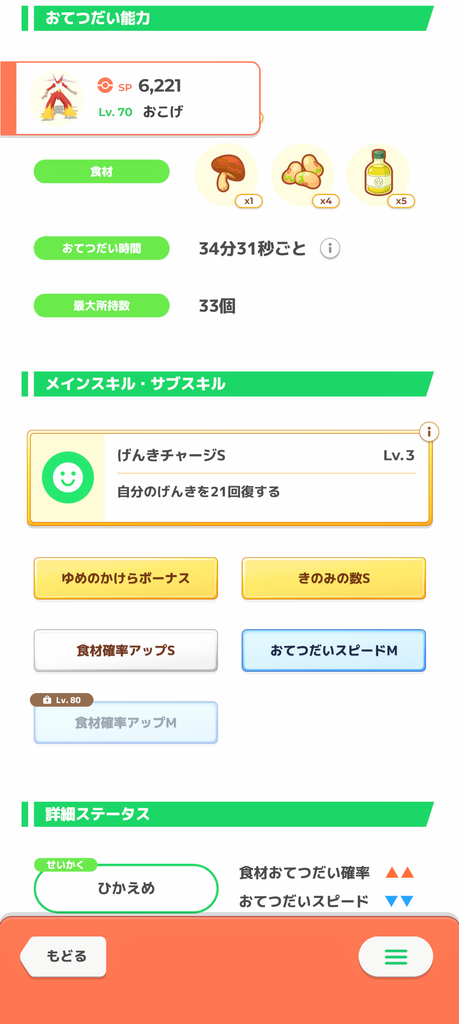
As a Berries specialist, Blaziken’s main job is to generate Strength through berries. The ingredients it gathers along the way can help cover shortages in my recipes or be saved for the following week.
Mushrooms and oil can sometimes be difficult to gather in sufficient quantities, so having Blaziken contribute a little extra is particularly useful.
However, I would also appreciate an AAA Blaziken that gathers only mushrooms. Mushrooms are among the ingredients that can be difficult to stockpile, so having a berry farmer supply them is valuable on its own.
In other words, ABC isn’t automatically better. Whether a spread is AAA or ABC, I appreciate it when it helps cover ingredients my team often lacks.
ABC Torterra Can Also Gather Useful Ingredient Quantities
My Torterra also has an ABC ingredient spread:
| Ingredient Slot | Ingredient | Quantity Per Ingredient Help |
|---|---|---|
| A (Lv. 1) | Tasty Mushroom | 1 |
| B (Lv. 30) | Soft Potato | 3 |
| C (Lv. 60) | Warming Ginger | 6 |
What I find especially appealing is the Warming Ginger unlocked at Lv. 60. Getting six ginger from a single ingredient help makes Torterra a useful source of extra ingredients for cooking.
For example, Bounce Curry Udon requires both Tasty Mushrooms and Warming Ginger, so this Torterra can contribute ingredients from both its A and C slots.
Of course, I don’t expect Torterra to reliably gather everything needed for the recipe by itself. I simply appreciate the additional ingredients it collects while remaining on my team primarily for its main skill.
Gardevoir: Ingredient Quantities Can Affect Inventory and Skill Triggers
For Skills specialists, the number of ingredients gathered per help can sometimes matter just as much as the ingredient type. Gardevoir is a good example.
Gardevoir’s Lv. 60 ingredient options are:
| Ingredient | Quantity Per Ingredient Help |
|---|---|
| Fancy Apple | 4 |
| Greengrass Corn | 2 |
| Large Leek | 2 |
Gardevoir is often kept on the team for long periods as a healer, making its inventory capacity worth considering.
For example, an AAA Gardevoir gathers four apples from its Lv. 60 ingredient slot. That can be convenient when you need lots of apples, but the larger quantity also fills its inventory faster.
Greengrass Corn and Large Leek, on the other hand, come in quantities of two from the Lv. 60 slot. This may help delay the point when Gardevoir’s inventory becomes full. Once its inventory is full, normal helping actions no longer provide new main skill trigger opportunities, so this can matter when you can’t check the game for an extended period.
Corn and leeks also have higher base Strength per ingredient than apples, allowing them to provide relatively more ingredient Strength while occupying fewer inventory slots.
Of course, that doesn’t make AAA Gardevoir a bad choice. When apple-heavy recipes were more important, having a healer that constantly supplied apples was genuinely useful.
For my current team, however, Skeledirge already gathers more than enough apples. That’s why I would personally prefer a Gardevoir with corn or leeks in its ingredient spread.
Still, this preference depends on your existing Pokémon and the recipes you’re making. When selecting Gardevoir, I would always prioritize its skill-triggering performance over its ingredient spread.
Conclusion: Evaluate Ingredient Spreads Based on Each Pokémon’s Role
For Ingredients specialists, I generally prioritize AAA and ABB because they can focus on gathering particular ingredients and remain useful as the cooking meta changes.
However, there are exceptions, such as an exceptionally strong ABA Pokémon you’ve already raised or an AAB or AAC Pokémon that performs well enough at Lv. 30 or 50.
For Berries and Skills specialists, I prioritize their primary roles and treat ingredient spreads as an additional bonus rather than a major selection requirement.
The important thing is not to judge a Pokémon by its ingredient spread alone, but to consider which ingredients you need and what role you want that Pokémon to fulfill.